+255 759 902 616info@sasutoursafaris.comMon–Fri 08:30–16:30 · 24/7 online support
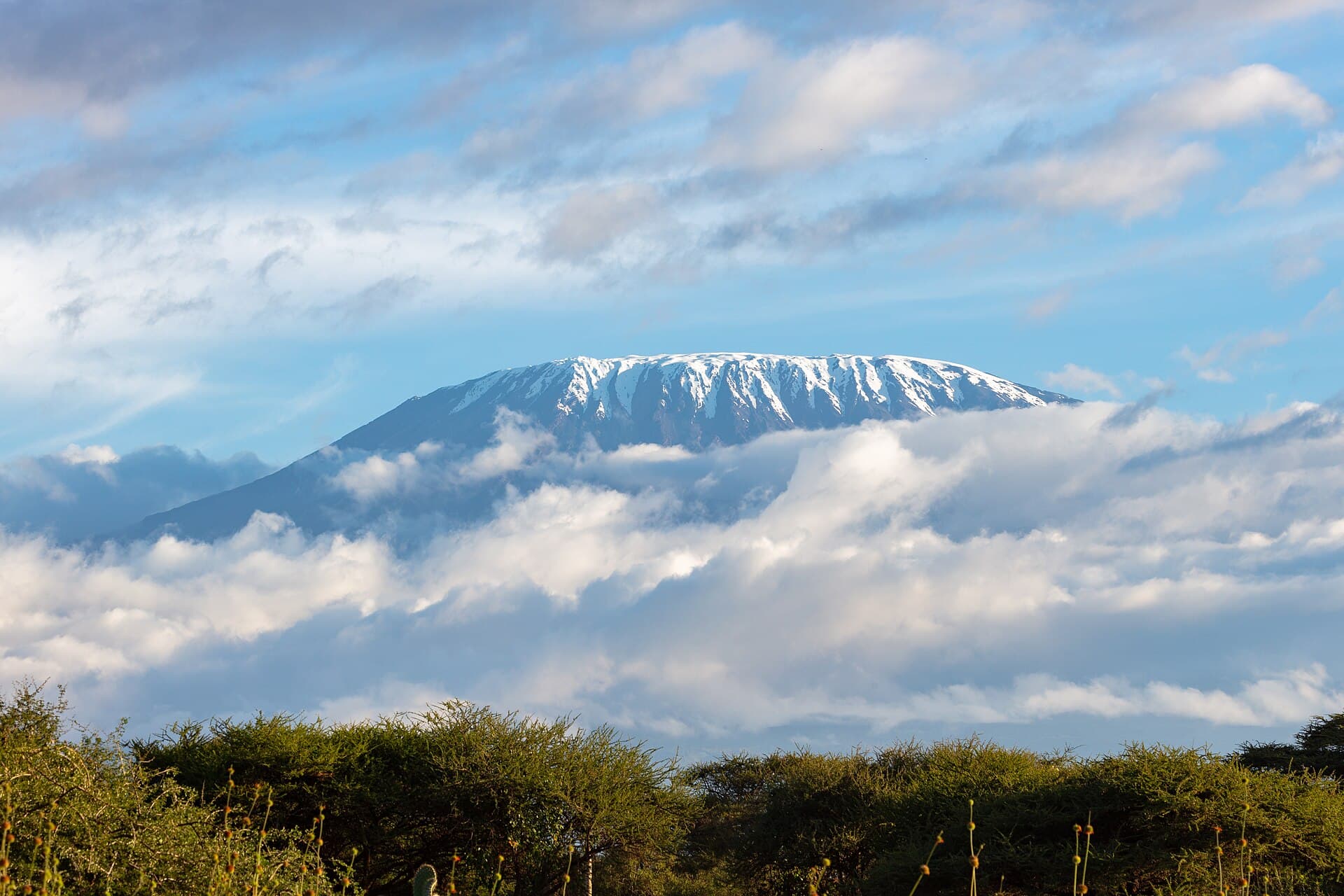
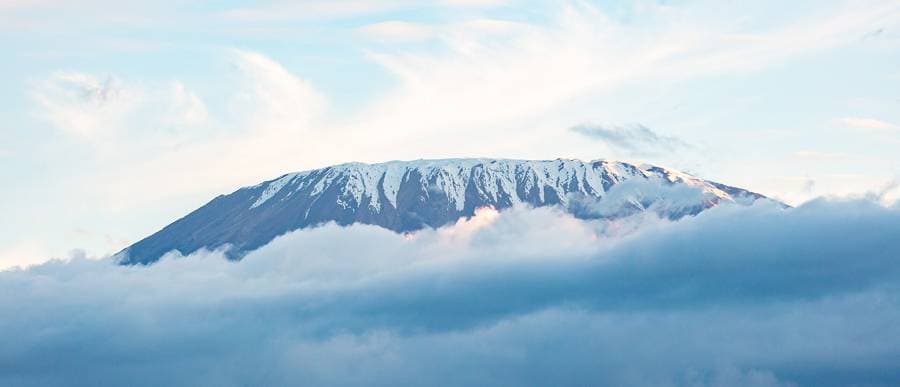
Snow-capped Mount Kilimanjaro above the clouds
MountainKilimanjaro Region

Mount Kilimanjaro

Stand on the roof of Africa

Best time
January – early March and June – October
Recommended stay
7 – 8 days on the mountain for a good summit chance
Nearest airport
Kilimanjaro International Airport (JRO)
Main attraction
Uhuru Peak, 5,895 m
Overview

About Mount Kilimanjaro

Mount Kilimanjaro is Africa's highest mountain and the world's tallest free-standing mountain. Its summit, Uhuru Peak on the Kibo cone, stands at 5,895 metres. No technical climbing is needed, so fit walkers with good preparation can reach the top.

The climb passes through five climate zones, from farmland and rainforest through heath and moorland to alpine desert and the glaciers of the summit. Success depends mostly on acclimatisation, which is why longer routes have higher summit rates.

All SASU Tours climbs use licensed mountain guides, fairly paid porters, quality camping gear and daily health checks.

Summit
Uhuru Peak, 5,895 m
National park
Kilimanjaro NP (KINAPA)
Status
UNESCO World Heritage Site
Trek length
5 – 9 days
Main attractions

What makes it special

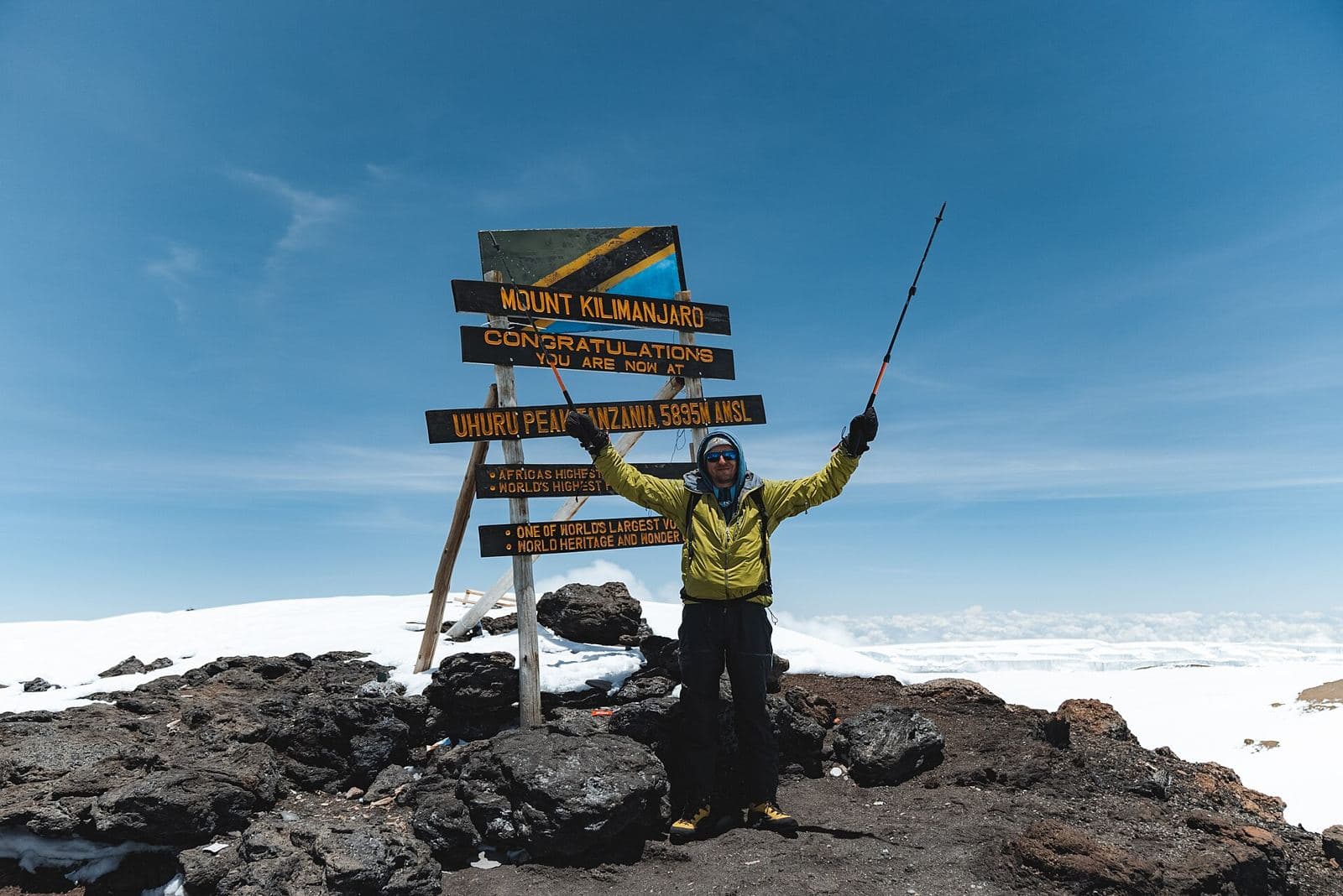
Climber celebrating at the Uhuru Peak sign

Uhuru Peak

The highest point in Africa, reached at sunrise after a night climb from high camp.
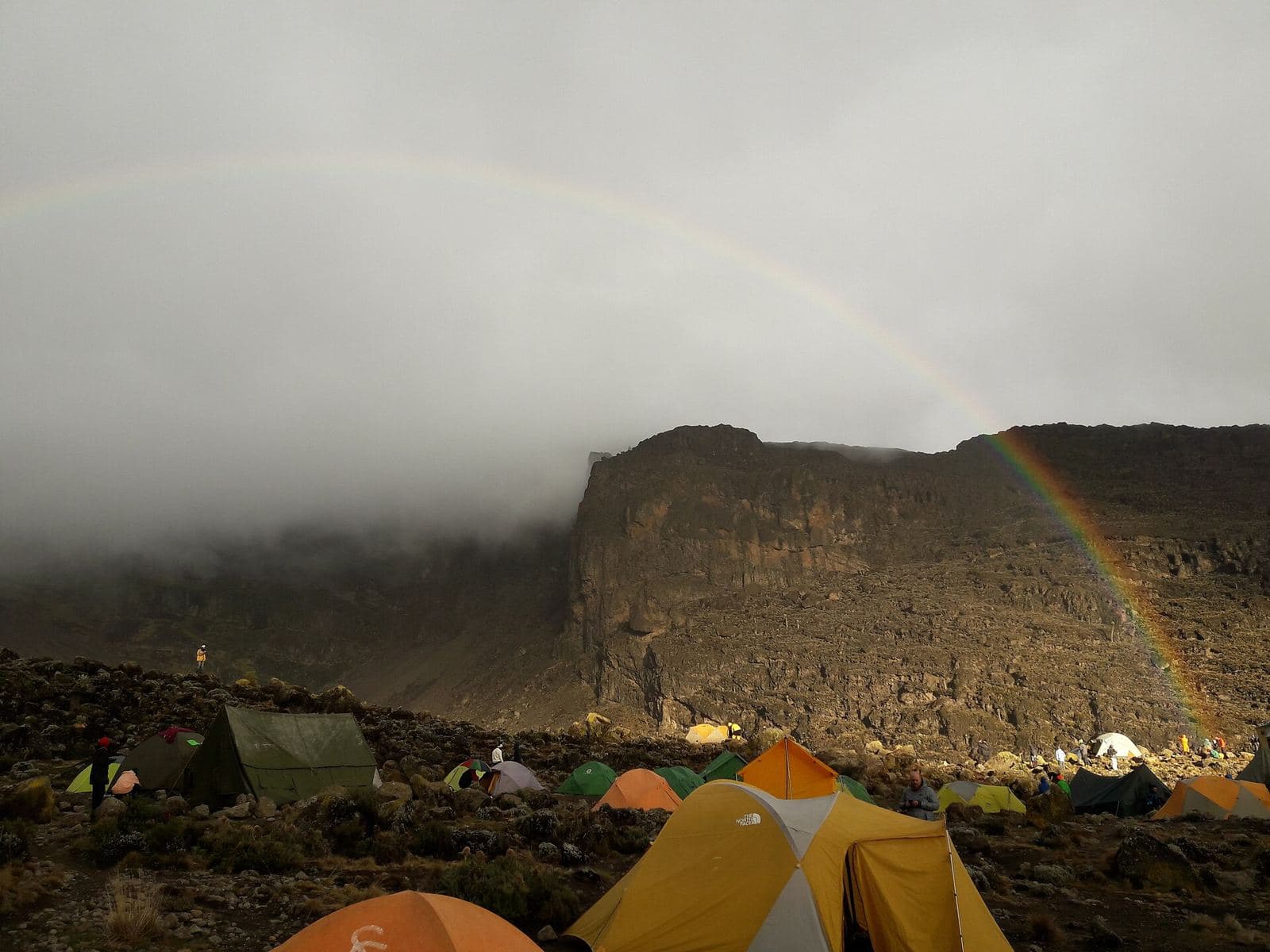
Tents at Barranco Camp below the Barranco Wall

Barranco Wall

A steep but non-technical scramble with huge views, on the Machame and Lemosho routes.
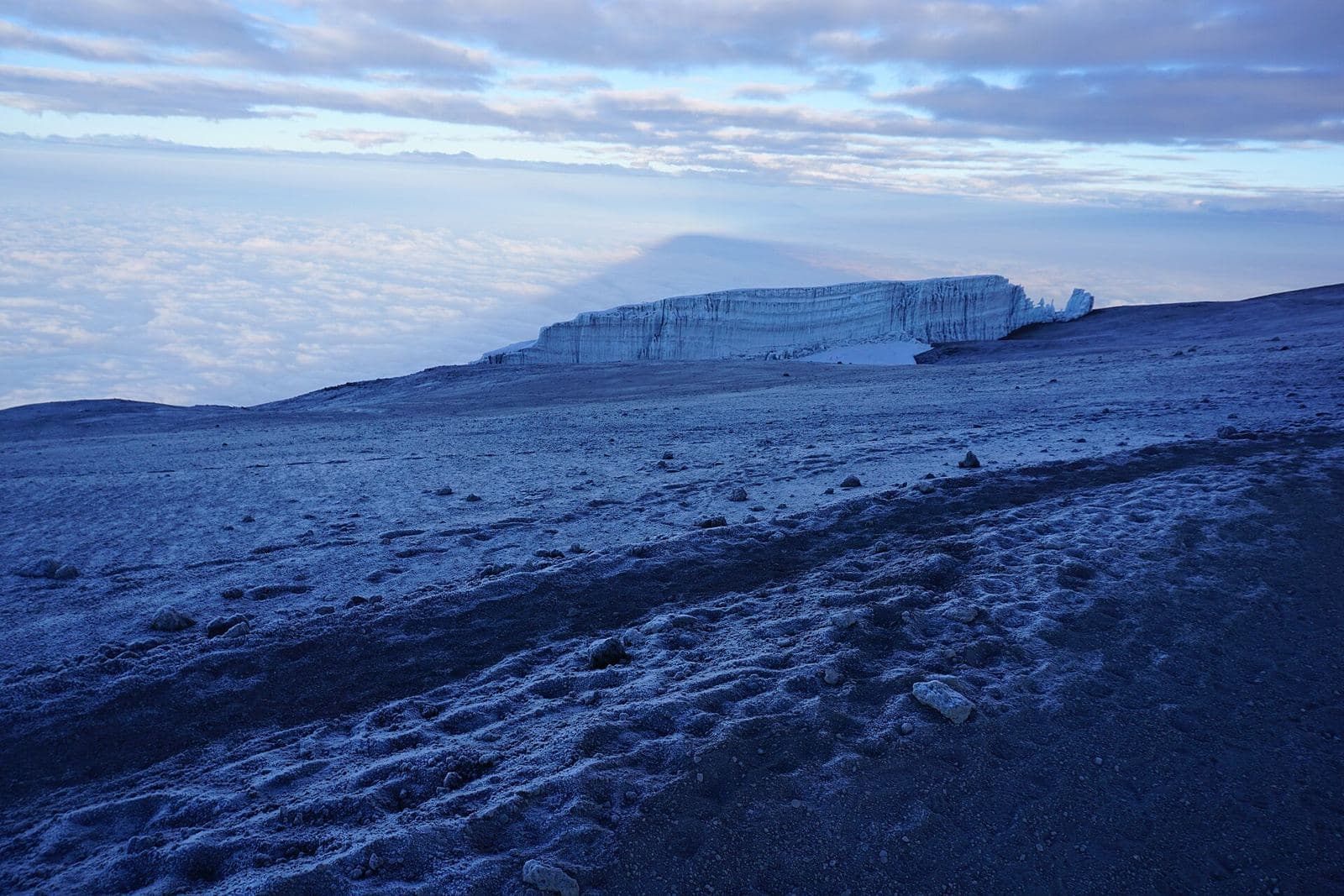
Glacier near the summit at sunrise

Summit glaciers

The shrinking ice fields near the crater rim, glowing at sunrise.

Shira Plateau

A high volcanic plateau with wide views of Kibo, crossed on western routes.

Activities

Things to do

Summit treks

Six routes from 5 to 9 days.

Day hikes

Day walks to Mandara Hut or the Maundi Crater.

Acclimatisation hikes

Mount Meru or Arusha National Park before the climb.

Kilimanjaro routes

Six main routes lead to Uhuru Peak. Compare them below, then open a route for stages, inclusions and equipment. Prices are per person for 2 climbers and include park fees, guides, porters, meals and camping equipment. Success rates are typical industry figures and depend on fitness, weather and acclimatisation.

Comparison of routes by length, difficulty, summit success, accommodation, crowds and price
RouteDaysDifficultySummit successSleepingCrowdsFrom (pp)
Marangu Route5–6 daysModerate≈ 65%HutsBusyTSh 4,550,000lowest price
Machame Route6–7 daysChallenging≈ 85%CampingBusyTSh 5,330,000
Lemosho Route7–8 daysChallenging≈ 90%CampingModerateTSh 6,370,000
Rongai Route6–7 daysModerate≈ 80%CampingQuietTSh 5,590,000
Northern CircuitHighest success8–9 daysChallenging≈ 95%CampingQuietTSh 7,410,000
Umbwe Route6–7 daysDemanding≈ 70%CampingQuietTSh 5,460,000
Success rates are typical industry figures for each route at its recommended length. Longer itineraries give your body more time to acclimatise and raise your chances of reaching Uhuru Peak.

Marangu Route

Marangu Gate

5–6 daysModerateFrom TSh 4,550,000

The only route with dormitory huts. Gentle gradients, same path up and down.

Major stages

  1. Mandara Hut
  2. Horombo Hut
  3. Kibo Hut
  4. Uhuru Peak

Included

  • Park and hut fees
  • Guide, assistant guide and porters
  • All meals on the mountain
  • Transfers to and from the gate

Not included

  • Tips for the crew
  • Personal gear
  • Travel insurance

Required equipment

  • Sleeping bag (−10 °C)
  • Warm layers
  • Head torch

Machame Route

Machame Gate

6–7 daysChallengingFrom TSh 5,330,000

The most popular camping route, scenic and steep, with good acclimatisation via Lava Tower.

Major stages

  1. Machame Camp
  2. Shira Cave
  3. Lava Tower
  4. Barranco Wall
  5. Karanga
  6. Barafu
  7. Uhuru Peak

Included

  • Park and camping fees
  • Guides, cook and porters
  • Tents, mess tent and toilet tent
  • All meals on the mountain

Not included

  • Tips for the crew
  • Sleeping bag hire
  • Travel insurance

Required equipment

  • Sleeping bag (−10 °C)
  • Waterproof jacket and trousers
  • Trekking poles

Lemosho Route

Londorossi Gate

7–8 daysChallengingFrom TSh 6,370,000

Remote western start across the Shira Plateau. Quiet, beautiful and with a high summit success rate.

Major stages

  1. Mti Mkubwa
  2. Shira 1
  3. Shira 2
  4. Barranco
  5. Karanga
  6. Barafu
  7. Uhuru Peak

Included

  • Park and camping fees
  • Guides, cook and porters
  • Tents and toilet tent
  • All meals on the mountain

Not included

  • Tips for the crew
  • Sleeping bag hire
  • Travel insurance

Required equipment

  • Sleeping bag (−10 °C)
  • Gaiters
  • Trekking poles

Rongai Route

Rongai Gate (north)

6–7 daysModerateFrom TSh 5,590,000

Approaches from the drier northern side near Kenya. Good choice in the rainy season.

Major stages

  1. Simba Camp
  2. Kikelewa
  3. Mawenzi Tarn
  4. Kibo Hut
  5. Uhuru Peak

Included

  • Park and camping fees
  • Guides, cook and porters
  • All meals on the mountain

Not included

  • Tips for the crew
  • Travel insurance

Northern Circuit

Londorossi Gate

8–9 daysChallengingFrom TSh 7,410,000

The longest route, circling the quiet northern slopes. Best acclimatisation and highest success rate.

Major stages

  1. Shira Plateau
  2. Moir Hut
  3. Buffalo Camp
  4. School Hut
  5. Uhuru Peak

Included

  • Park and camping fees
  • Guides, cook and porters
  • All meals on the mountain

Not included

  • Tips for the crew
  • Travel insurance

Umbwe Route

Umbwe Gate

6–7 daysDemandingFrom TSh 5,460,000

Short and very steep. Only for experienced, fit trekkers who acclimatise well.

Major stages

  1. Umbwe Cave
  2. Barranco
  3. Karanga
  4. Barafu
  5. Uhuru Peak

Included

  • Park and camping fees
  • Guides, cook and porters
  • All meals on the mountain

Not included

  • Tips for the crew
  • Travel insurance

What to pack

Most items can be hired in Moshi. We send a full packing list after booking.

  • Sleeping bag rated to −10 °C
  • Waterproof jacket and trousers
  • Down jacket
  • Thermal base layers
  • Broken-in hiking boots
  • Warm hat, gloves and buff
  • Head torch with spare batteries
  • Trekking poles
  • Sunglasses and SPF 50 sunscreen
  • Water bottles or hydration bladder (3 L)
  • Day pack (30–35 L)
  • Personal first-aid kit
Best time to visit

When to go

January – early March and June – October

  1. January: Best
  2. February: Best
  3. March: Good
  4. April: Rainy / low season
  5. May: Rainy / low season
  6. June: Good
  7. July: Best
  8. August: Best
  9. September: Best
  10. October: Good
  11. November: Rainy / low season
  12. December: Good
  • Best
  • Good
  • Rainy / low season

April – May are the wettest months. January – February are warmer; July – September are colder but clearer.

Recommended stay: 7 – 8 days on the mountain for a good summit chance

Location & access

Getting there

Fly into Kilimanjaro International Airport (JRO), about 1 hour from Moshi and the park gates. We transfer you to your hotel for a gear check and briefing the evening before the climb.

Nearest airports & airstrips

  • Kilimanjaro International AirportJRO

Where to stay

Mountain tents on all routes except Marangu, which uses dormitory huts. Before and after the climb we book hotels in Moshi or Arusha.

Park fees

Entry and conservation fees

FeeAmount (USD)Notes
Conservation fee — adult non-resident$70 per person / day+18% VAT
Camping fee$50 per person / nightCamping routes
Hut fee$60 per person / nightMarangu route
Rescue fee$20 per person / climb

All park fees are included in SASU Tours climb prices.

Park and conservation fees are set by TANAPA, NCAA and the Zanzibar authorities and can change. Figures shown are indicative; your quotation always uses the current official rates.

Before you go

Requirements & safety

  • Climbing with a licensed guide is required by Kilimanjaro National Park
  • Minimum age 10 years for the summit
  • Travel insurance that covers trekking up to 6,000 m and evacuation
  • A medical check is recommended, especially for heart or lung conditions

Safety

Altitude sickness is the main risk. We follow a slow pace (pole pole), build in acclimatisation days, check oxygen levels twice a day and carry emergency oxygen and a first-aid kit.

Any climber showing serious symptoms is taken down immediately. Guides have the final say on continuing to the summit.

Tours & safaris

Packages that visit Mount Kilimanjaro